

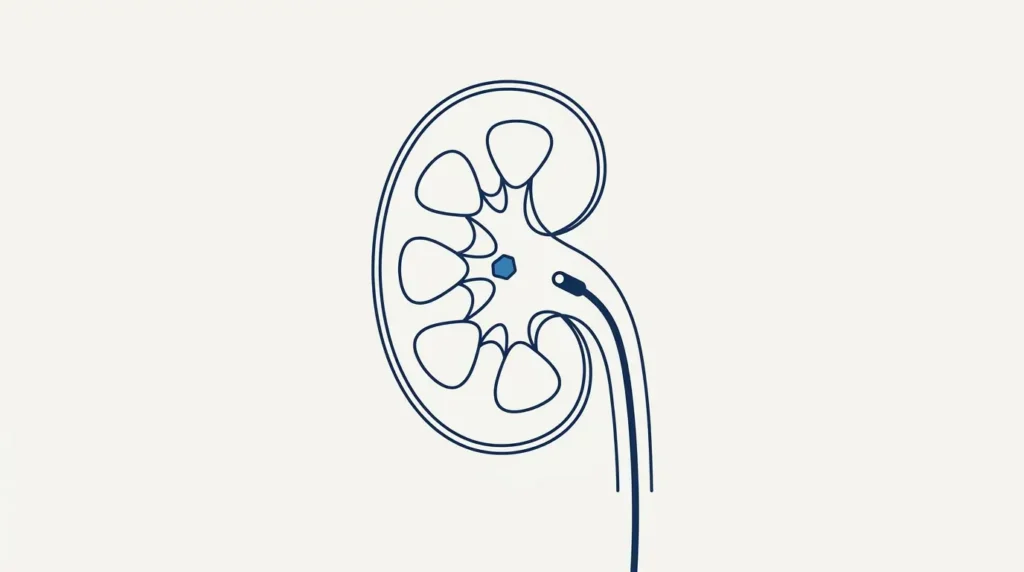
Kidney stones are one of the most common — and most painful — urological problems we see. The good news is that modern treatment is faster, gentler and more effective than ever. Here is what every patient should know.
What causes kidney stones?
Stones form when minerals and salts in the urine become concentrated enough to crystallise. Dehydration, diet, family history and certain medical conditions all play a part. Once a stone forms, it can sit silently in the kidney for years — or move into the ureter and cause sudden, severe pain.
Recognising the symptoms
The classic sign is renal colic: intense, cramping pain in the side or back that comes in waves. You may also notice blood in the urine, nausea, or a frequent urge to pass urine. Smaller stones sometimes pass unnoticed, but any severe or persistent pain deserves prompt assessment.
How stones are treated today
Treatment depends on the size and position of the stone. Many small stones pass naturally with fluids and pain relief. For those that do not, ureteroscopy with laser fragmentation offers a highly effective, keyhole route to becoming stone-free — usually as a day case. Shock-wave lithotripsy (ESWL) is a non-invasive alternative for suitable stones.
The bottom line
If you have had a kidney stone, you are at higher risk of another — so prevention matters too. A specialist can help you understand why your stone formed and how to reduce the chance of it happening again.